
Jumping adults on animals or floors
Fleas
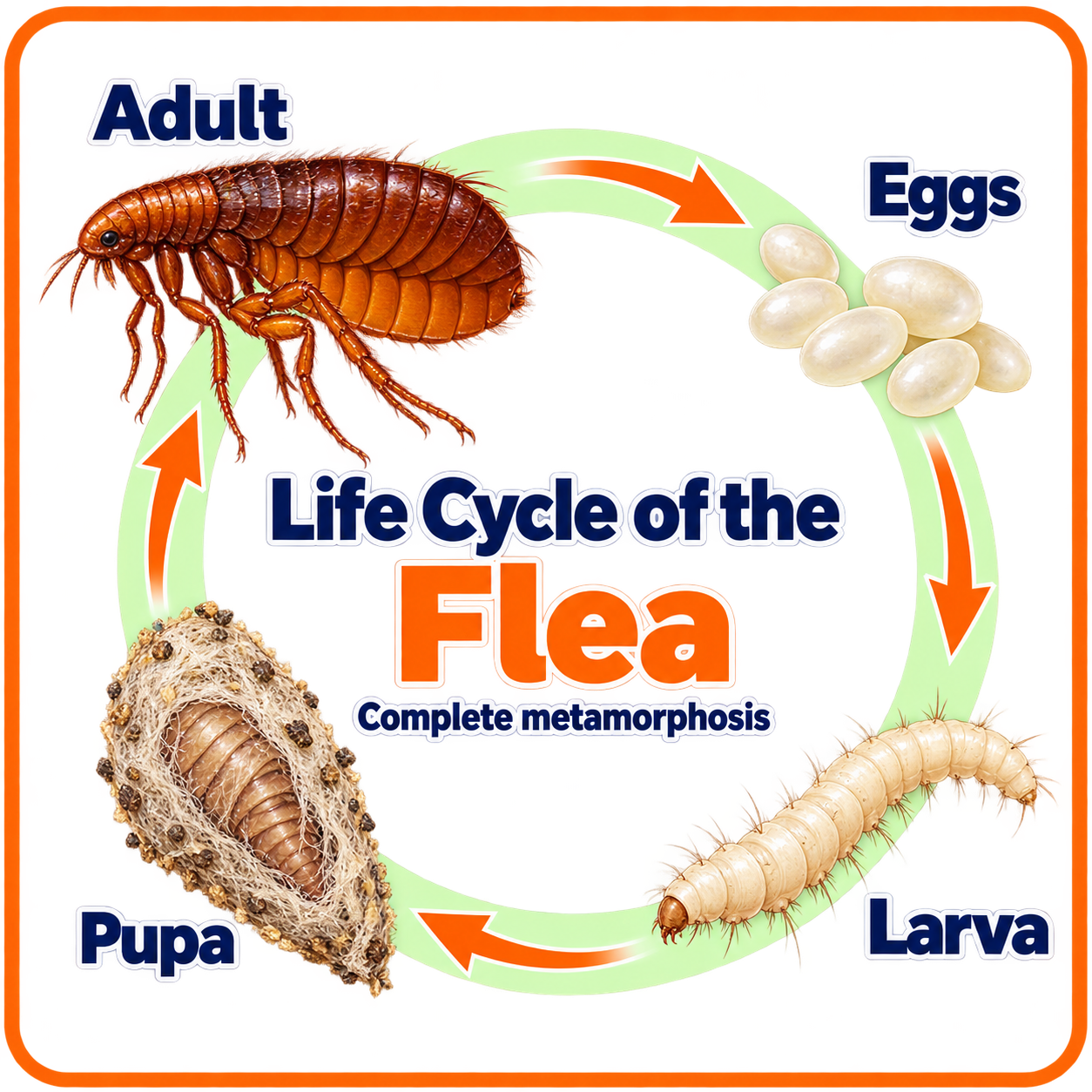
Life Cycle
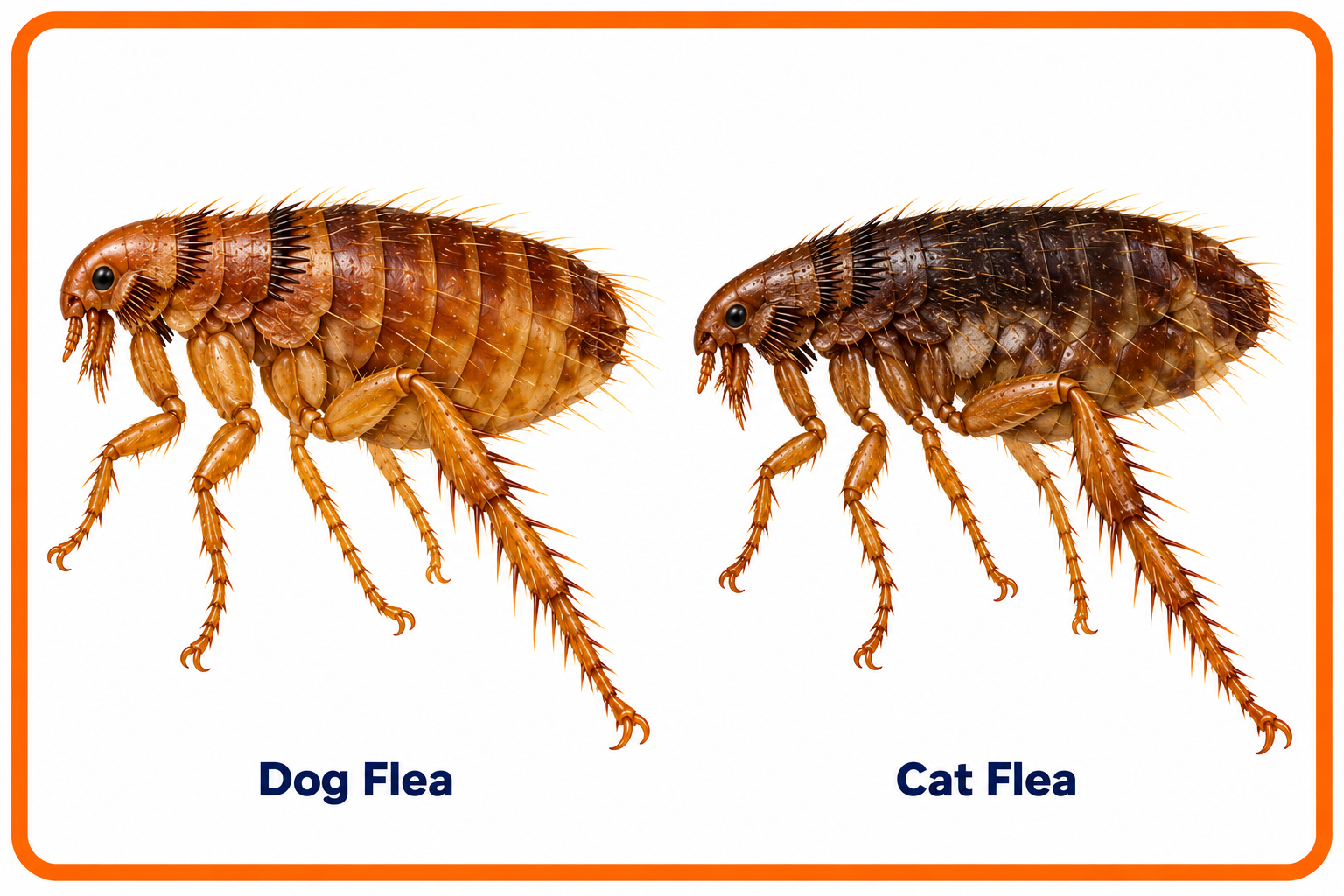
- Color
- Dark reddish brown
- Size
- Small; often only a few millimeters
- Key Markings
- Wingless, flattened side to side
- Activity
- Adults jump onto hosts
- Common Areas
- Pet resting areas, bedding, floors
Description
Cat and dog fleas; Ctenocephalides spp.
Adult fleas feed on blood, while immature stages develop in the surrounding environment. Eggs can fall from an animal into bedding, carpets, and other resting areas. Larvae feed in protected places, then form cocoons before becoming adults. Cat fleas can infest dogs as well as cats.
What Attracts Them?
- Animal hosts
- Protected pet resting areas
- Suitable humidity and organic debris
How Do They Get Inside?
- Pets or visiting animals
- Wildlife using sheltered areas
- Infested items or resting sites
Signs of an Infestation
Dark flea dirt in pet areas
Pets scratching more often
Activity where animals rest
How Serious or Harmful Are They?
Flea bites cause irritation and can affect both people and pets. Their environmental stages mean that treating visible adults alone may leave developing fleas behind.
Treatment / How to Get Rid of Them
What You Can Do
- Coordinate pet treatment with your veterinarian
- Vacuum pet resting areas regularly
- Wash suitable bedding
- Follow the preparation and follow-up instructions for your service
How Pest Guys Helps

Assess — We inspect your property, identify pests and activity, locate nesting and hiding areas, and find contributing conditions.
Communicate — We explain our findings, discuss the recommended plan, answer your questions, and confirm understanding and agreement.
Treat — We put the agreed plan into action, perform the initial treatment, provide ongoing service, and monitor results to adjust as needed.
Frequently Asked Questions
What should I look for first?
Wingless, flattened side to side. Jumping adults on animals or floors. A clear photograph and the location of activity can help with identification.
What conditions should I check?
Start with animal hosts. Coordinate pet treatment with your veterinarian.
Does seeing one mean there is an infestation?
A single sighting does not establish the extent of a problem. Repeated activity, developing young, nests, or other evidence help us determine what is happening.
How does Pest Guys decide what to do?
We use A-C-T: Assess, Communicate, Treat. The pest, its location, and the conditions at your home guide the recommendation. We explain the plan and any preparation needed before service.
Comparisons With Similar Pests
Not sure which pest you have? Return to the Pest Library or ask us to help identify it before selecting a treatment approach.
Need help identifying a pest?
Tell us what you’re seeing. We’ll help determine the next step.