
Small mothlike flies on walls
Drain Fly
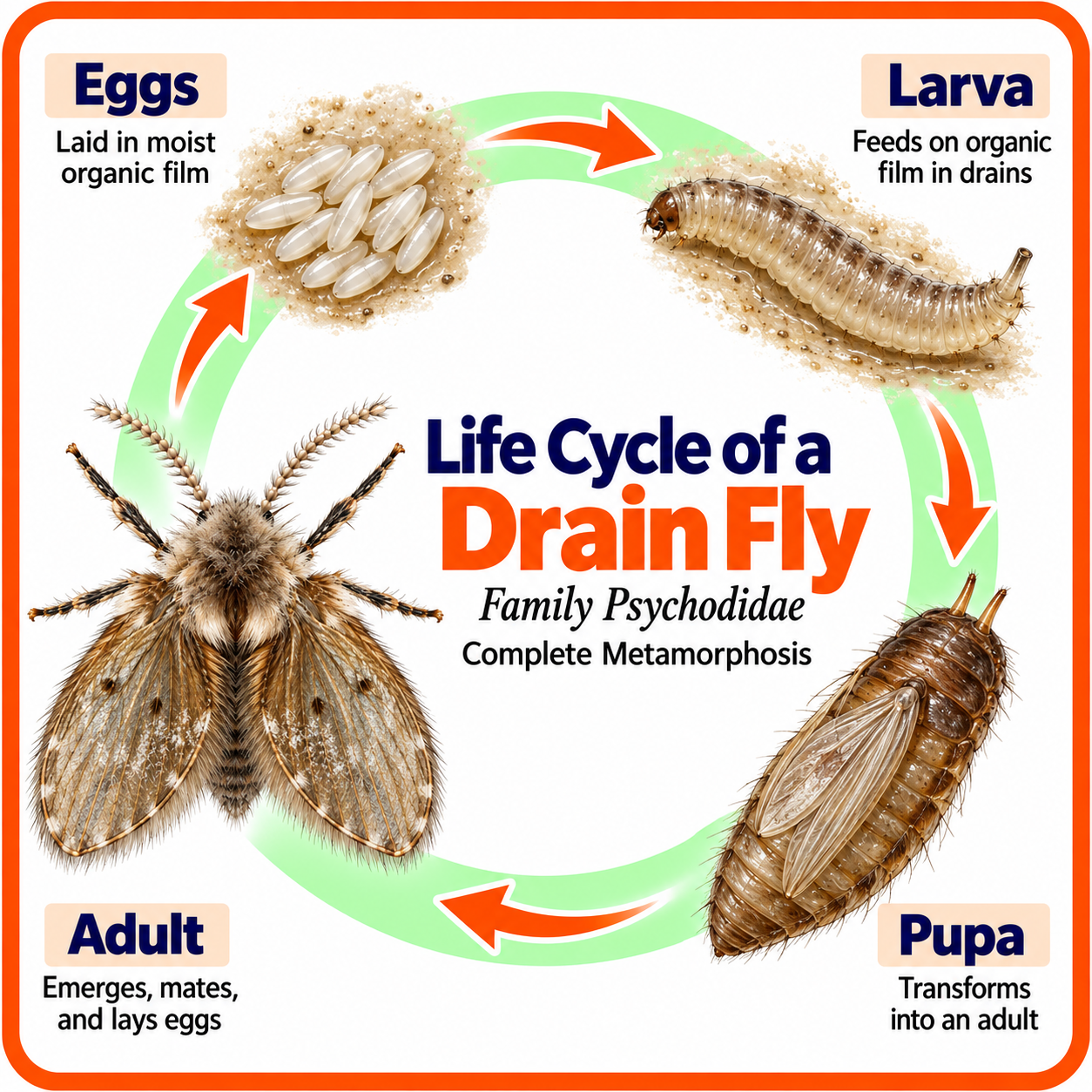
Life Cycle
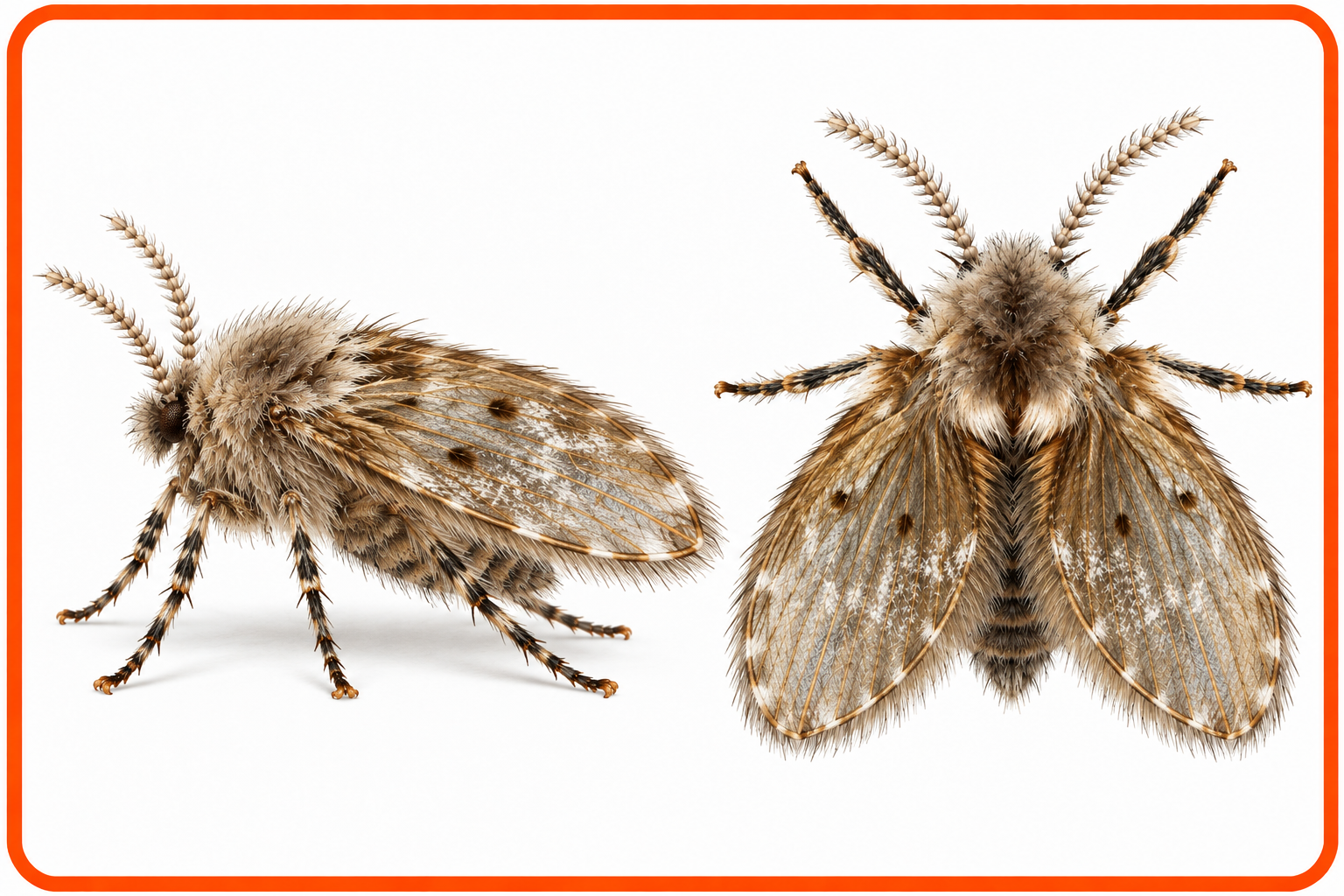
- Color
- Gray to brown
- Size
- Small; generally a few millimeters
- Key Markings
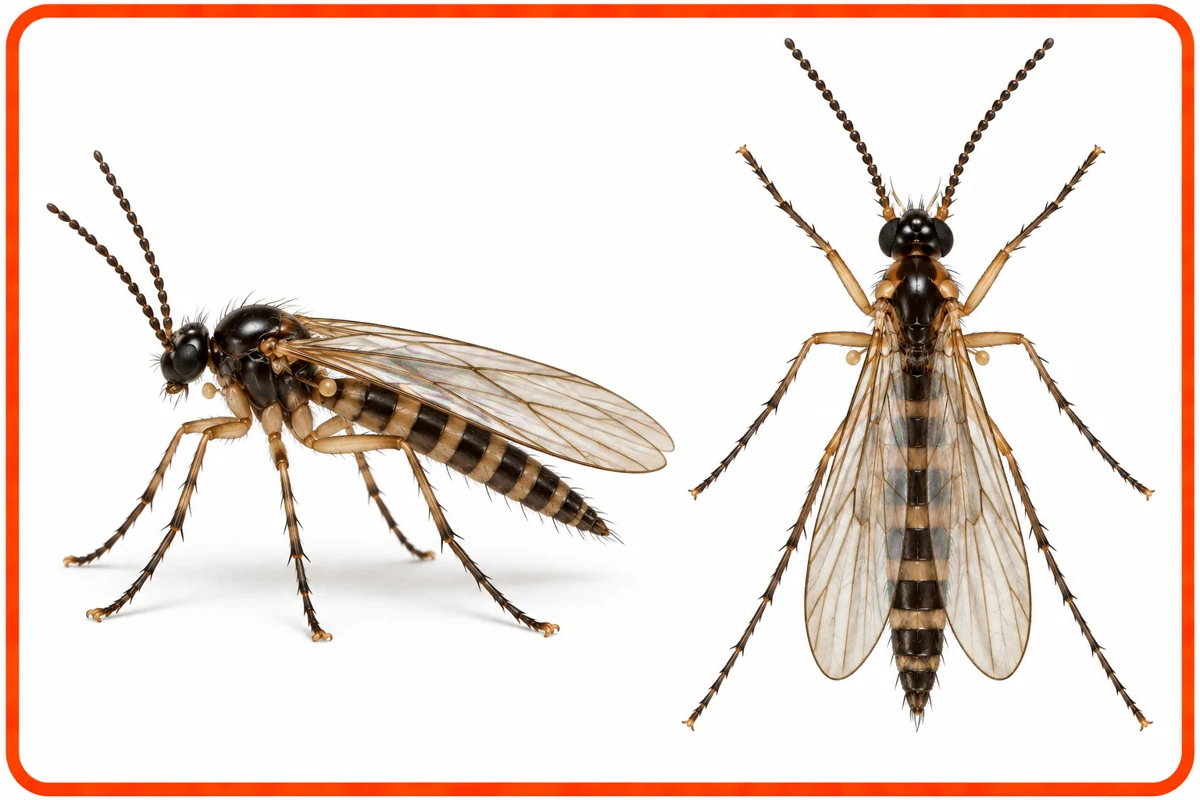
- Hairy, mothlike wings
- Activity
- Weak flights near breeding sites
- Common Areas
- Drains and damp organic film
Description
Family Psychodidae
Drain flies look like tiny moths because their bodies and wings are hairy. Larvae develop in wet organic film, often inside drains or other damp areas. Eggs, larvae, and pupae develop before the adult emerges. A drain is a possible source, not proof without inspection.
Flies develop through egg, larva, pupa, and adult stages. Removing adult flies does not remove the material supporting their young.
What Attracts Them?
- Wet organic buildup
- Slow or infrequently cleaned drains
- Persistent plumbing moisture
How Do They Get Inside?
- Development inside organic film
- Openings from nearby breeding sites
- Plumbing defects or leaks
Signs of an Infestation
Adults near sinks or floor drains
Repeated short flights
Wet organic residue in a suspect area
How Serious or Harmful Are They?
Drain flies are usually a nuisance. Continued activity may point to inaccessible organic buildup or a plumbing condition that needs correction.
Treatment / How to Get Rid of Them
What You Can Do
- Identify the actual breeding site
- Remove organic film with appropriate cleaning
- Correct leaks and drainage issues
- Seek plumbing help for inaccessible or damaged areas
How Pest Guys Helps

Assess — We inspect your property, identify pests and activity, locate nesting and hiding areas, and find contributing conditions.
Communicate — We explain our findings, discuss the recommended plan, answer your questions, and confirm understanding and agreement.
Treat — We put the agreed plan into action, perform the initial treatment, provide ongoing service, and monitor results to adjust as needed.
Frequently Asked Questions
What should I look for first?
Hairy, mothlike wings. Small mothlike flies on walls. A clear photograph and the location of activity can help with identification.
What conditions should I check?
Start with wet organic buildup. Identify the actual breeding site.
Does seeing one mean there is an infestation?
A single sighting does not establish the extent of a problem. Repeated activity, developing young, nests, or other evidence help us determine what is happening.
How does Pest Guys decide what to do?
We use A-C-T: Assess, Communicate, Treat. The pest, its location, and the conditions at your home guide the recommendation. We explain the plan and any preparation needed before service.
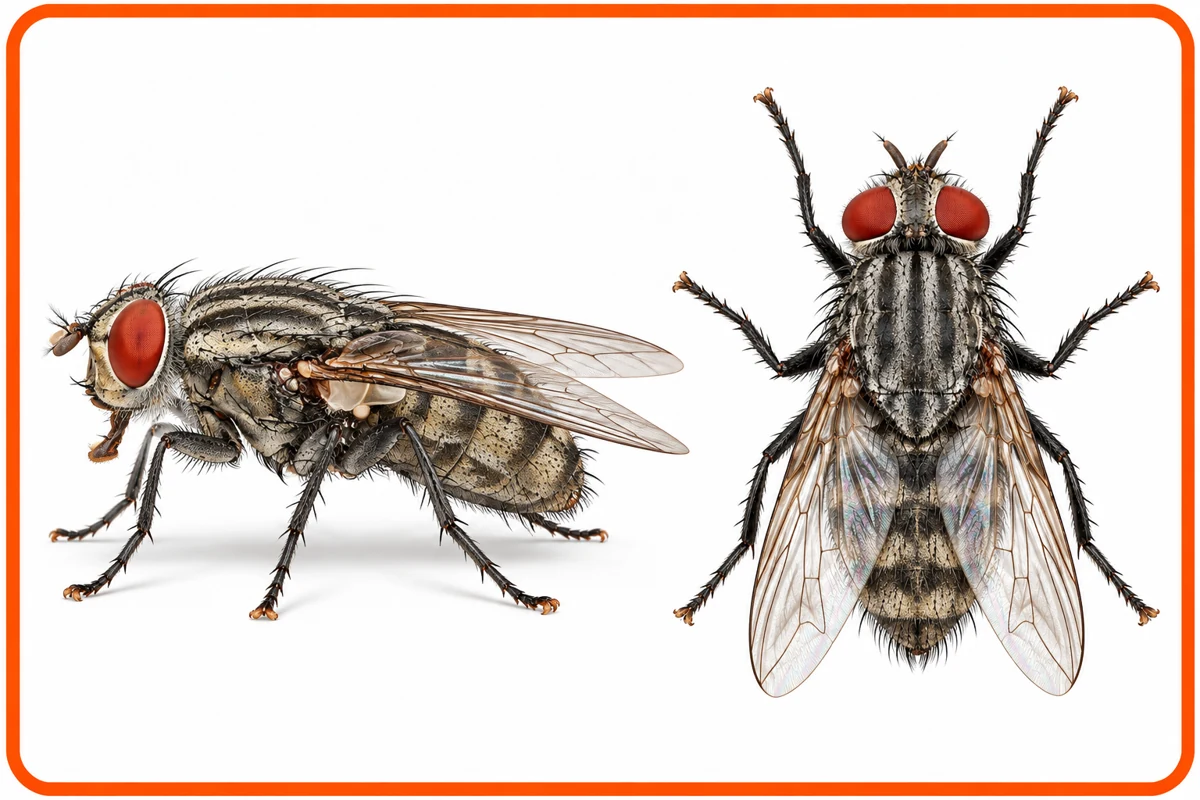
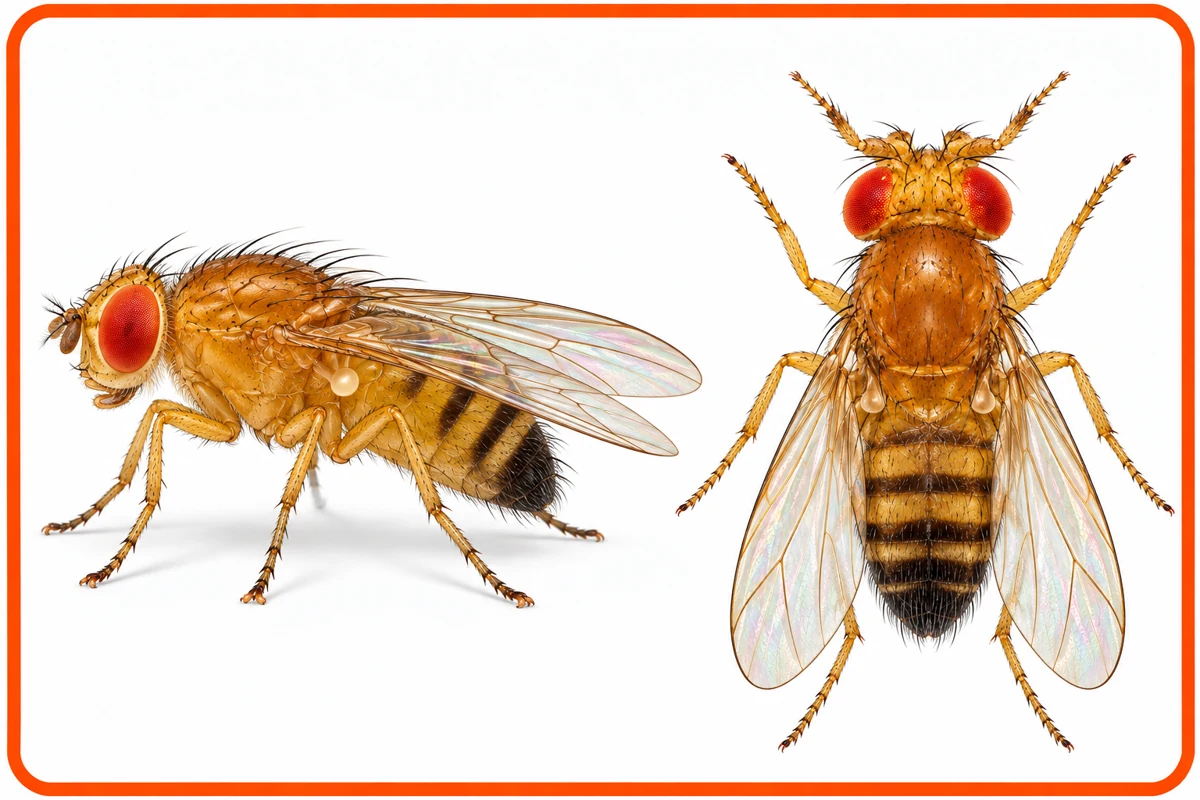
Comparisons With Similar Pests
Need help identifying a pest?
Tell us what you’re seeing. We’ll help determine the next step.