
Flies gathering at windows
House Fly
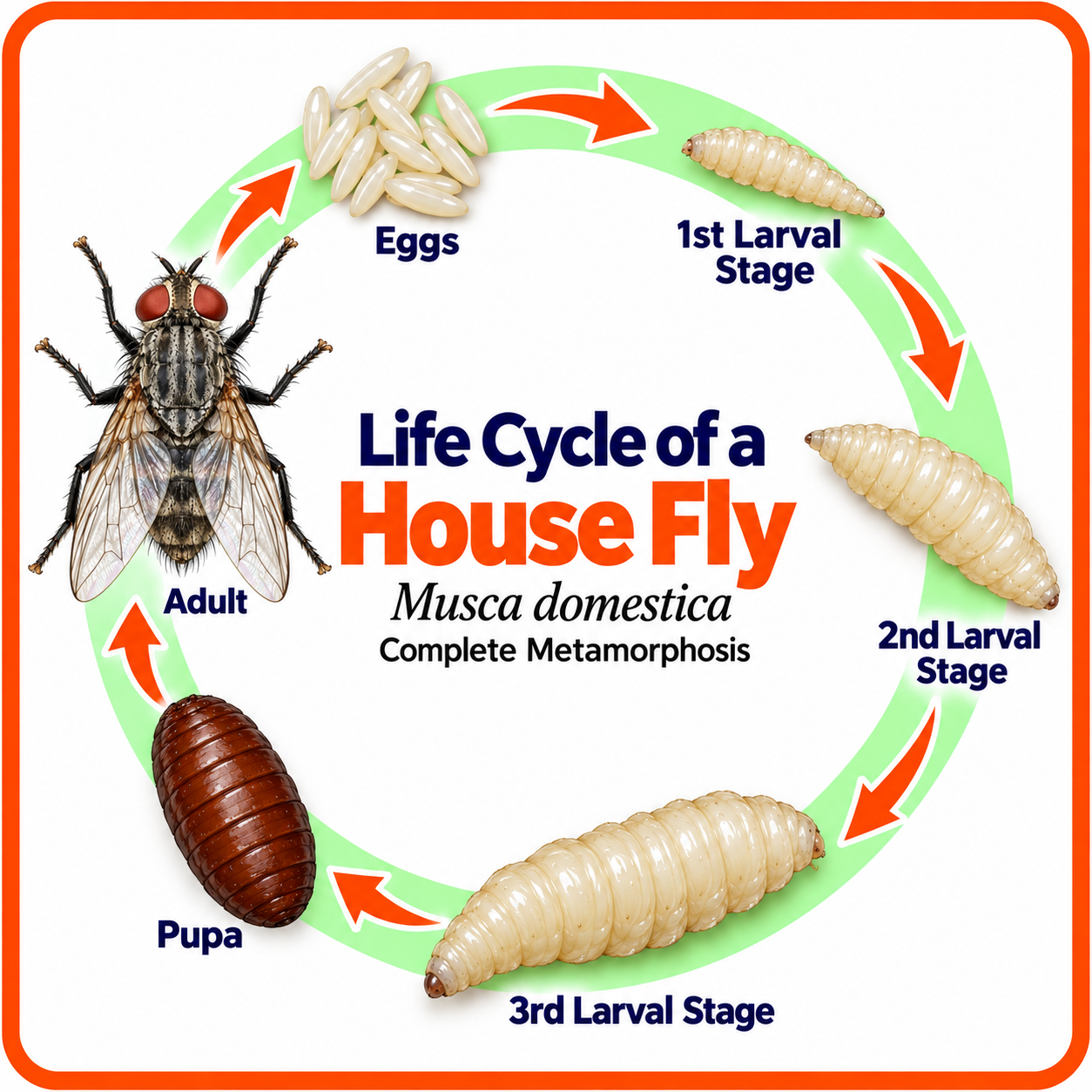
Life Cycle
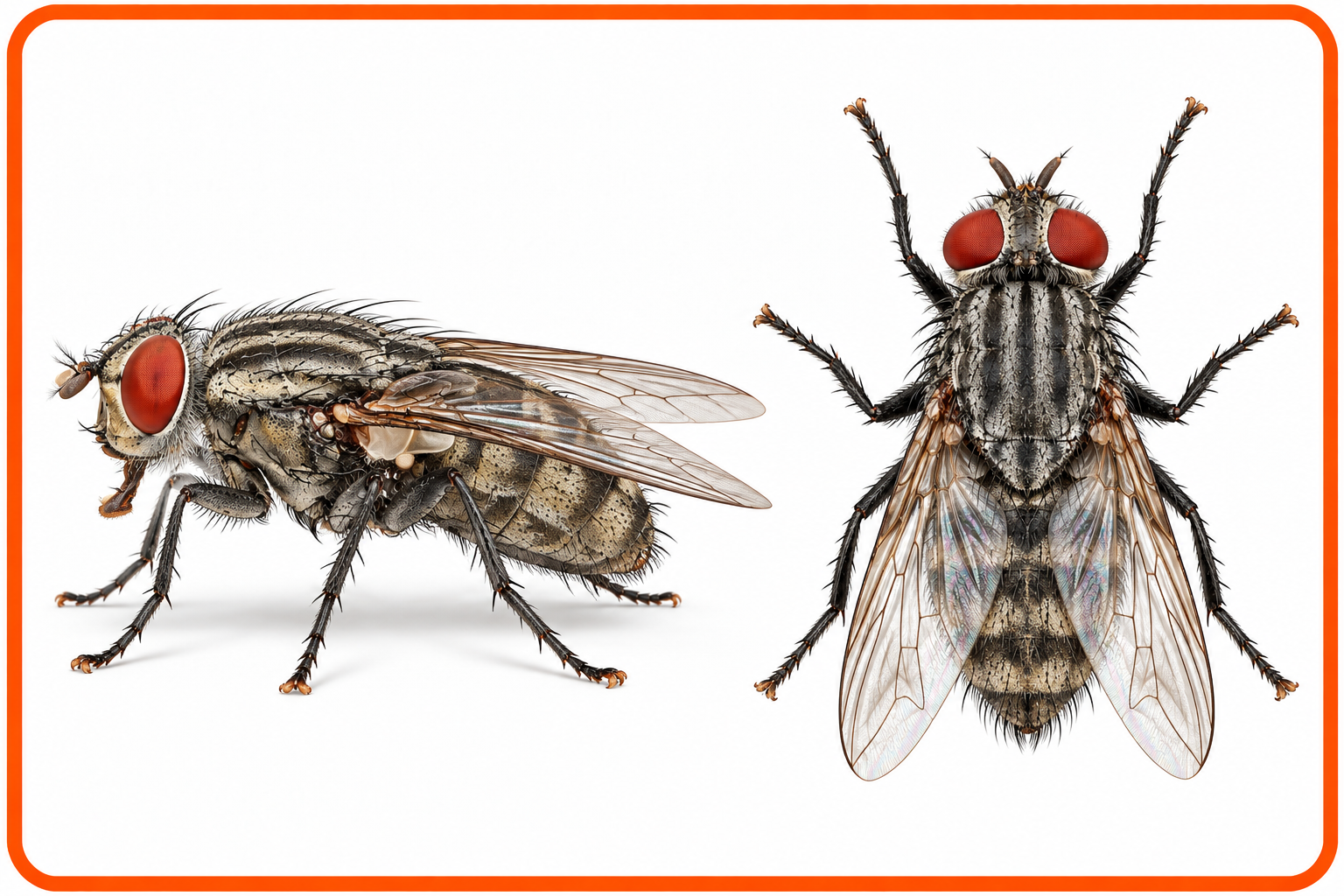
- Color
- Gray with darker thoracic stripes
- Size
- Adults commonly about ¼ inch
- Key Markings
- One pair of wings; large eyes
- Activity
- Usually active by day
- Common Areas
- Garbage, animal waste, kitchens
Description
Musca domestica
House flies develop in moist decomposing material such as animal waste and garbage. Larvae are maggots that feed in the breeding material before pupating. Adults visit a wide range of surfaces, so finding and removing the developmental source is central to lasting control.
Flies develop through egg, larva, pupa, and adult stages. Removing adult flies does not remove the material supporting their young.
What Attracts Them?
- Exposed garbage and food waste
- Animal waste
- Moist decomposing material
How Do They Get Inside?
- Open doors
- Damaged screens
- Nearby breeding sources
Signs of an Infestation
Repeated activity near trash
Maggots in waste material
Flies returning after adults are removed
How Serious or Harmful Are They?
House flies can move contaminants from waste to food or food-contact surfaces. Adult control alone does not remove a breeding source.
Treatment / How to Get Rid of Them
What You Can Do
- Keep waste tightly contained
- Clean bins and remove animal waste
- Repair screens and close doors
- Locate and remove larval breeding material
How Pest Guys Helps

Assess — We inspect your property, identify pests and activity, locate nesting and hiding areas, and find contributing conditions.
Communicate — We explain our findings, discuss the recommended plan, answer your questions, and confirm understanding and agreement.
Treat — We put the agreed plan into action, perform the initial treatment, provide ongoing service, and monitor results to adjust as needed.
Frequently Asked Questions
What should I look for first?
One pair of wings; large eyes. Flies gathering at windows. A clear photograph and the location of activity can help with identification.
What conditions should I check?
Start with exposed garbage and food waste. Keep waste tightly contained.
Does seeing one mean there is an infestation?
A single sighting does not establish the extent of a problem. Repeated activity, developing young, nests, or other evidence help us determine what is happening.
How does Pest Guys decide what to do?
We use A-C-T: Assess, Communicate, Treat. The pest, its location, and the conditions at your home guide the recommendation. We explain the plan and any preparation needed before service.
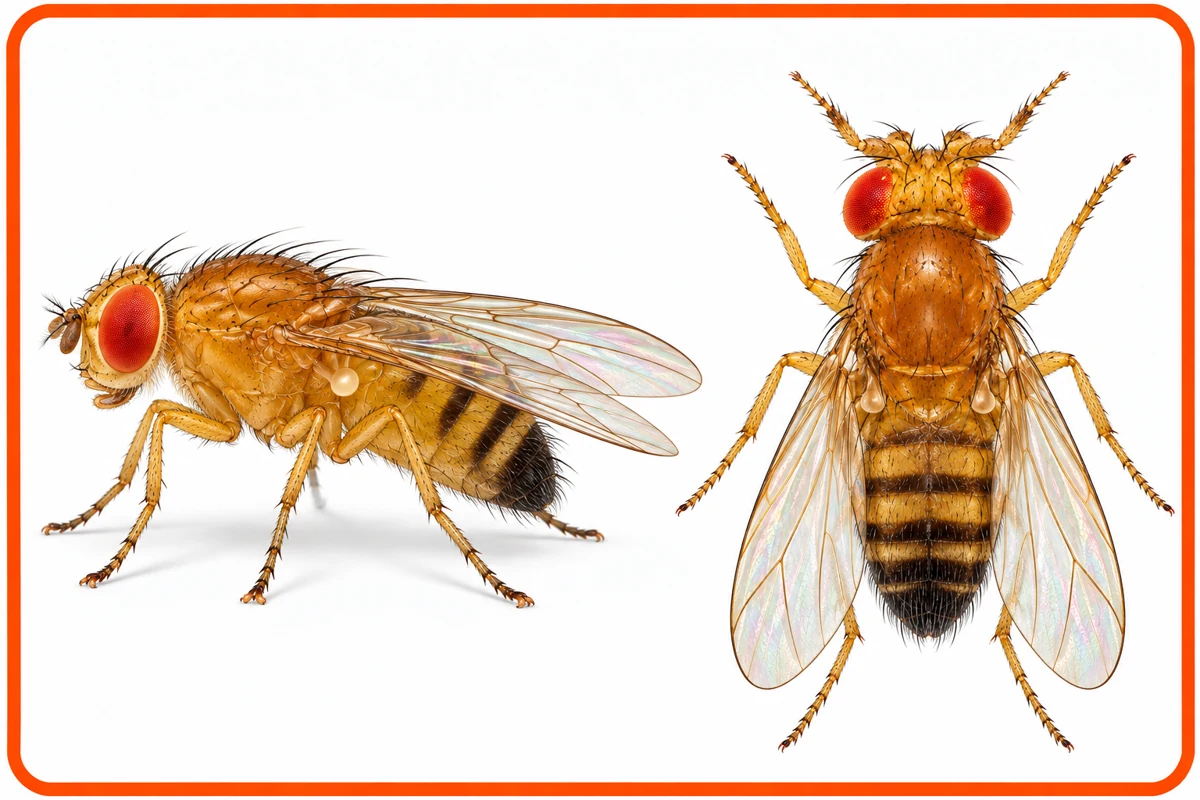
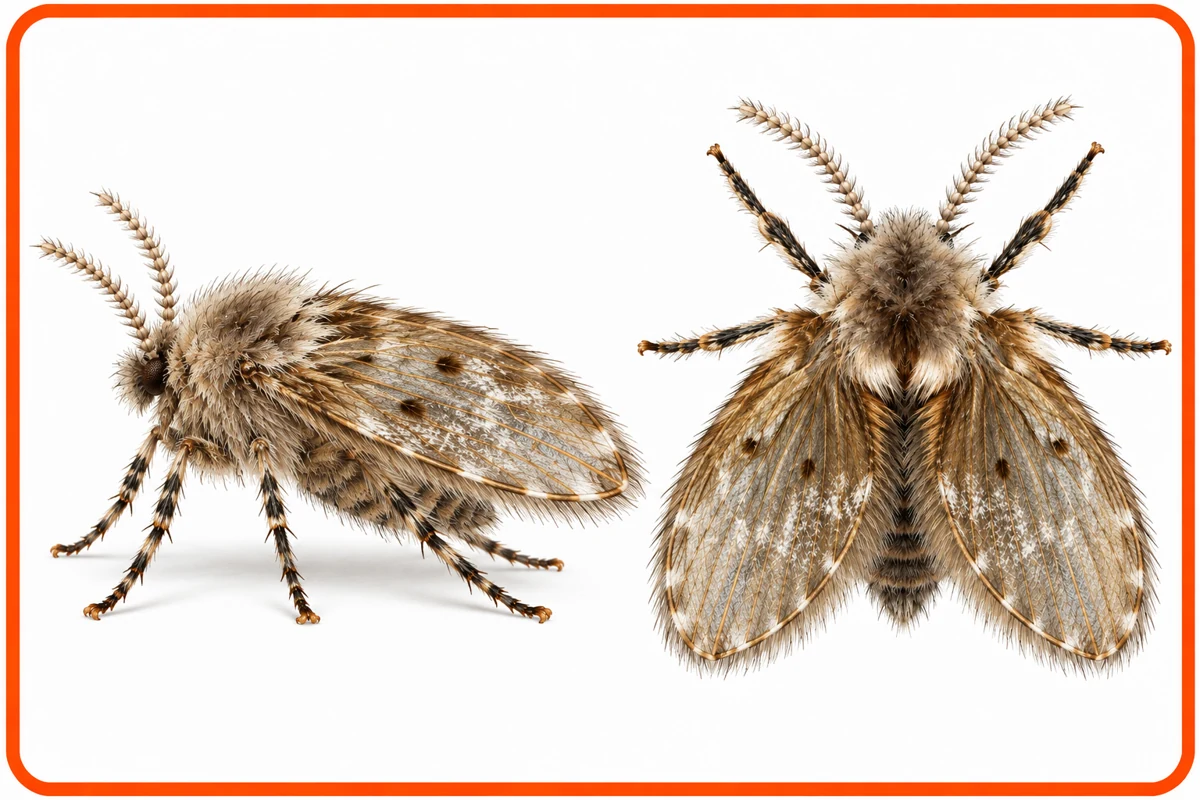
Comparisons With Similar Pests
Need help identifying a pest?
Tell us what you’re seeing. We’ll help determine the next step.